Being charged with Driving Under the Influence (DUI) in Alabama can have serious consequences that affect your freedom, finances, driving privileges, employment opportunities, and future.
Unfortunately, many people do not fully understand Alabama DUI laws until they find themselves facing criminal charges.
Whether you have been arrested for DUI, are concerned about a recent traffic stop, or simply want to understand your rights, this guide explains the basics of Alabama DUI laws and what drivers need to know.
What Is a DUI in Alabama?

Under Alabama law, a person may be charged with DUI if they operate or are in actual physical control of a vehicle while impaired by:
- Alcohol
- Illegal drugs
- Prescription medications
- Controlled substances
- A combination of alcohol and drugs
A DUI charge does not always require obvious intoxication. Law enforcement officers may rely on observations, testing, and other evidence when determining impairment.
What Is the Legal Blood Alcohol Concentration (BAC) Limit?
For most adult drivers in Alabama:
0.08% BAC
A Blood Alcohol Concentration (BAC) of 0.08% or higher is considered above the legal limit.
However, drivers may still be charged with DUI even if their BAC is below 0.08% if officers believe they are impaired.
Commercial Drivers Face Stricter Rules
Commercial driver’s license (CDL) holders are held to a higher standard.
For commercial vehicle operation, the BAC limit is:
0.04% BAC
A DUI conviction can have significant consequences for commercial drivers, including potential loss of employment and commercial driving privileges.
Underage DUI Laws in Alabama
Alabama has a zero-tolerance policy for underage drinking and driving.
Drivers under age 21 may face legal consequences with significantly lower alcohol levels than adult drivers.
These cases can carry penalties affecting driving privileges and future opportunities.
What Happens During a DUI Investigation?
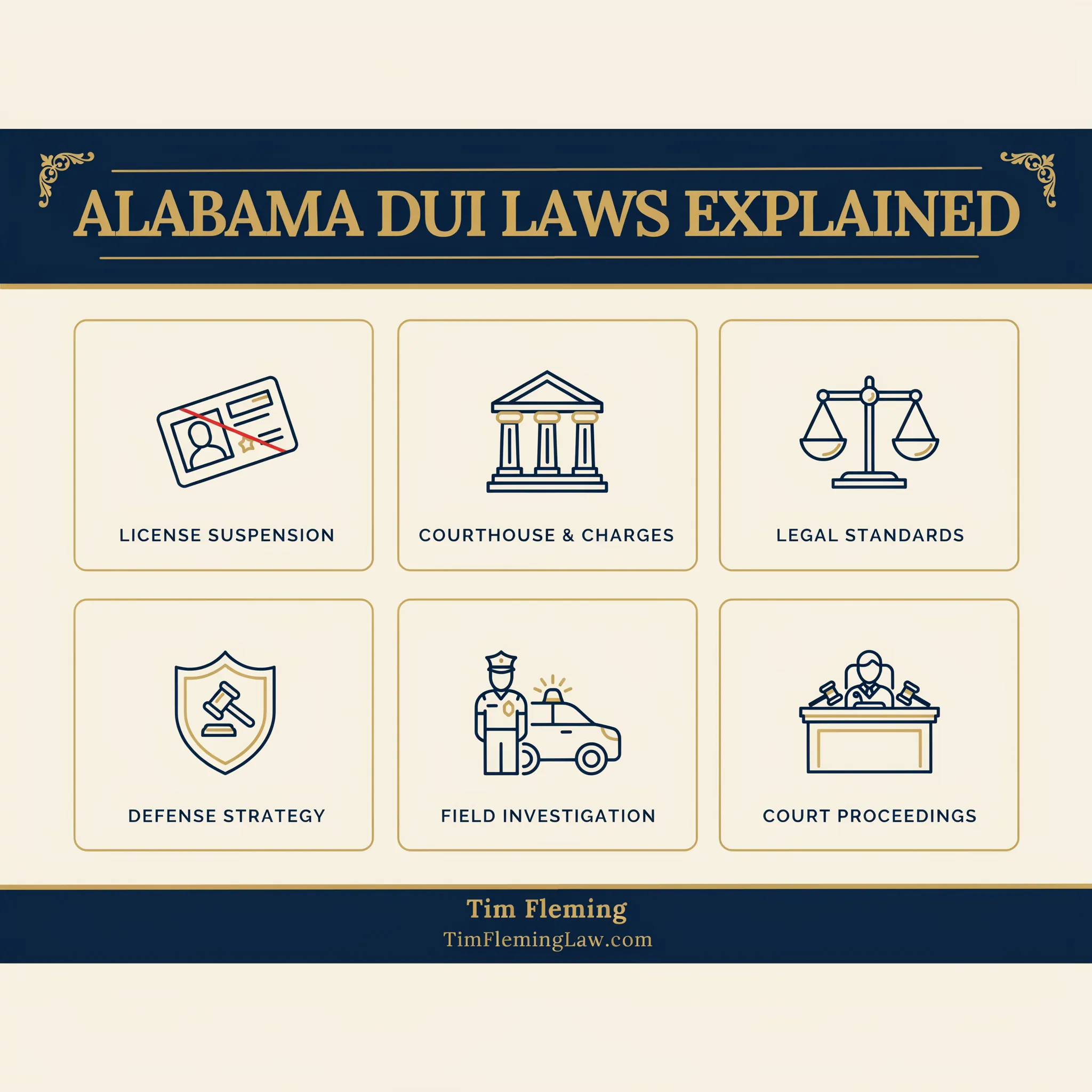
A DUI investigation often begins with a traffic stop.
An officer may observe:
- Erratic driving
- Speeding
- Weaving between lanes
- Failure to obey traffic signals
- Accidents or collisions
The officer may then conduct:
Field Sobriety Tests
These tests are designed to evaluate balance, coordination, and cognitive function.
Breath Testing
Breath-testing devices may be used to estimate Blood Alcohol Concentration.
Officer Observations
Officers may note:
- Speech patterns
- Physical appearance
- Odor of alcohol
- Driving behavior
- Responses to questions
What Are the Penalties for a First DUI in Alabama?
Penalties vary depending on the facts of the case.
Potential consequences may include:
- Criminal fines
- Court costs
- Driver’s license suspension
- Mandatory education programs
- Probation
- Possible jail time
Every case is unique, and outcomes depend on numerous factors.
Can Refusing a Breath Test Hurt Your Case?
Many drivers wonder whether refusing a breath test will help them avoid DUI charges.
Under Alabama’s implied consent laws, refusing certain chemical tests may trigger separate consequences involving driving privileges.
Refusal does not automatically prevent prosecutors from pursuing DUI charges.
Because every situation is different, drivers should understand the potential consequences before making decisions during an investigation.
Will a DUI Stay on My Record?
A DUI conviction can have long-term effects.
Potential impacts may include:
- Increased insurance premiums
- Employment challenges
- Professional licensing issues
- Background check concerns
- Commercial driving restrictions
Because the consequences can extend well beyond court proceedings, DUI charges should always be taken seriously.
Can DUI Charges Be Challenged?
Yes.
A DUI arrest does not automatically result in a conviction.
Potential issues that may be examined include:
Legality of the Traffic Stop
Did law enforcement have a valid reason for the stop?
Testing Procedures
Were testing devices properly maintained and administered?
Officer Conduct
Were constitutional rights protected throughout the investigation?
Evidence Problems
Can the prosecution prove impairment beyond a reasonable doubt?
An experienced DUI attorney can review the facts of a case and identify possible defenses.
What Should You Do After a DUI Arrest?
If you have been arrested for DUI:
Stay Calm
Avoid making emotional decisions.
Protect Your Rights
Be respectful but understand that you have legal rights.
Document Important Information
Write down everything you remember about the stop and arrest.
Address License Issues Quickly
Some deadlines may affect your driving privileges.
Speak With an Experienced DUI Attorney
Early legal guidance often provides the best opportunity to evaluate your options and develop a defense strategy.
Frequently Asked Questions About Alabama DUI Laws
What is the legal alcohol limit in Alabama?
For most drivers, the legal BAC limit is 0.08%.
Can I be arrested for DUI if my BAC is below 0.08%?
Yes. Officers may still pursue charges if they believe impairment exists.
What happens if I refuse a breath test?
Refusing certain tests may lead to separate consequences involving your driver’s license.
Will I lose my license after a DUI arrest?
License issues may arise independently of the criminal case.
Should I hire a DUI lawyer?
Because DUI charges can affect your future, many individuals choose to seek legal representation.
Why Experience Matters
DUI cases involve criminal law, administrative procedures, scientific evidence, constitutional protections, and complex legal rules.
Tim Fleming brings more than 30 years of legal experience to the defense of individuals facing DUI charges in Alabama. As both a former prosecutor and defense attorney, he understands how DUI cases are investigated, prosecuted, and challenged.
Contact Tim Fleming Law Firm
If you have been arrested for DUI in Mobile, Baldwin County, or surrounding Alabama communities, understanding your legal rights is critical.
Tim Fleming Law Firm helps individuals navigate the legal process, protect their rights, and pursue the best possible outcome for their case.
Contact Tim Fleming Law Firm today to schedule a confidential consultation and discuss your legal options.