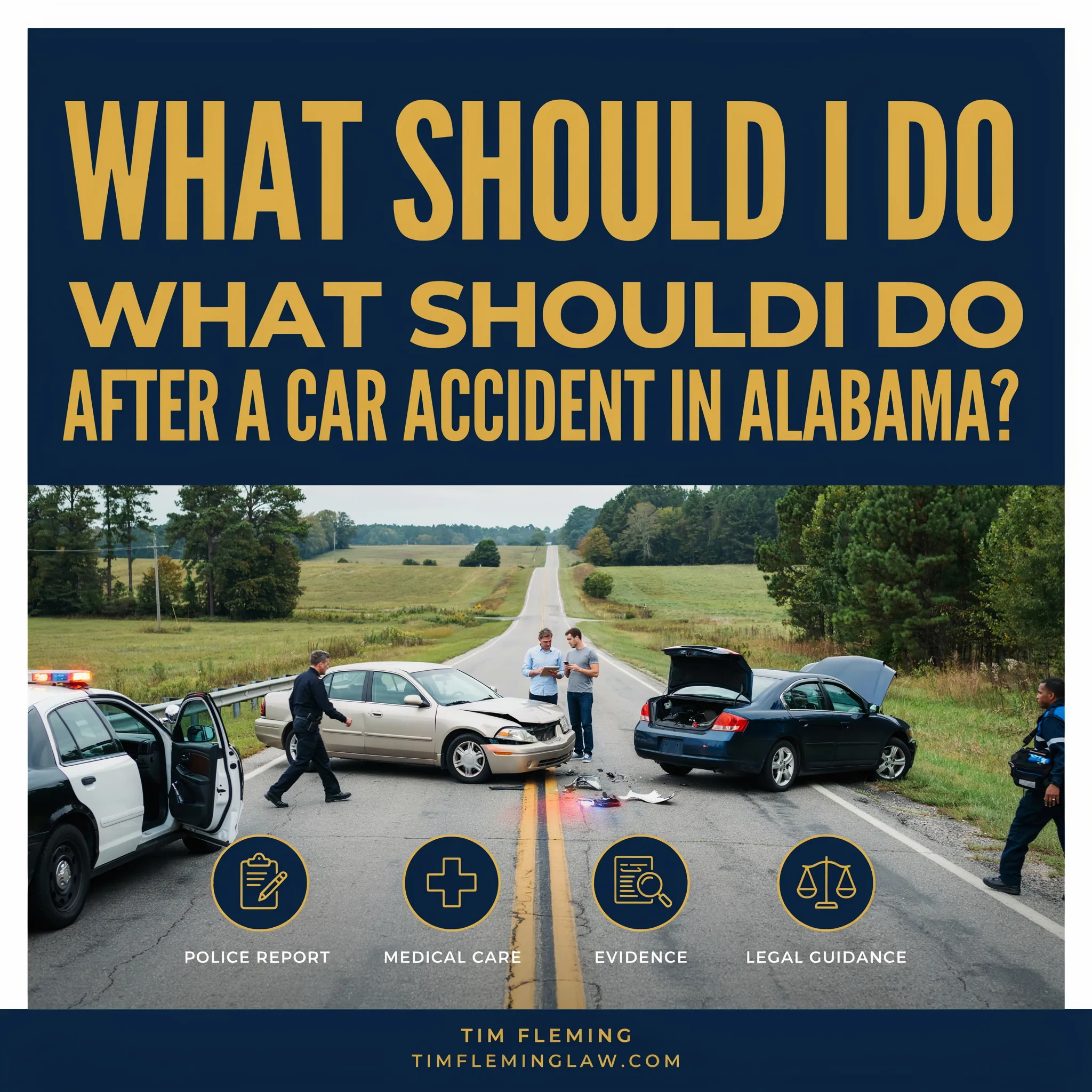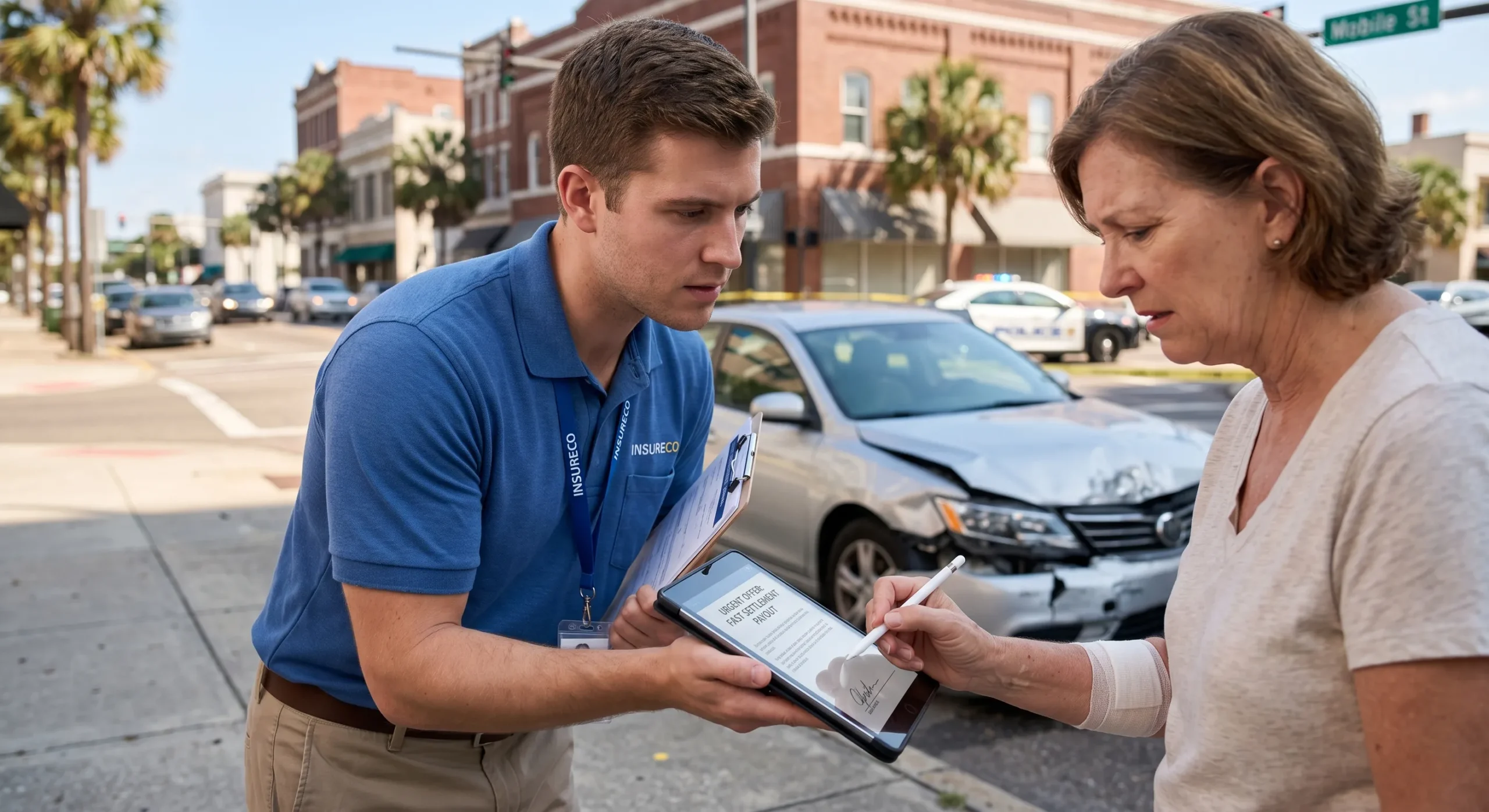
After a car accident in Mobile, Alabama, it is not unusual to hear from an insurance company quickly. In some cases, the company may ask for a statement or present an early settlement offer before the full impact of the accident is clear.
That can feel helpful in the moment. But an early offer is not always a fair one.
Why a Fast Settlement Offer Can Happen So Quickly
Insurance companies are businesses. One of their goals is to resolve claims efficiently and control costs. In some cases, that means trying to settle before the full extent of injuries, treatment, lost income, or other damages is known.
That does not automatically mean every offer is unfair. It does mean you should understand what is being offered before agreeing to anything.

-
Some Injuries Take Time to Fully Show Up
Not every injury is obvious at the scene of a crash. Pain, stiffness, or other symptoms may become more noticeable over time.
If a person agrees to settle too early, they may not yet know the full cost of:
- medical treatment,
- follow-up care,
- time away from work, or
- other accident-related losses.
-
The First Offer May Not Reflect the Full Value of the Claim
An early settlement offer may cover only part of the damages involved in a case. Depending on the facts, a claim may involve more than immediate medical bills or vehicle damage.
A person may also need to consider:
- future treatment,
- lost wages,
- long-term limitations, or
- other losses recognized under Alabama law.
-
A Settlement Usually Ends the Claim
In many cases, accepting a settlement involves signing documents that release the claim. Once that happens, it may be difficult or impossible to seek additional compensation later for the same accident.
That is one reason people should understand the full picture before signing anything.
-
Statements to Insurance Companies Can Matter
Soon after a crash, an insurance company may ask for a recorded statement or detailed explanation of what happened. What you say can affect how the claim is evaluated.
Before giving a statement, it is often wise to understand why the information is being requested and how it may be used.
-
People Are Often Under Pressure After a Crash
After an accident, many people are dealing with stress, missed work, transportation problems, and medical concerns. Quick cash can be tempting when bills start showing up.
That pressure can make a fast offer seem more attractive than it really is.
What You Should Do After a Car Accident in Mobile, Alabama
If you are contacted by an insurance company after a crash:
- be careful about rushing into a decision,
- keep records related to the accident,
- seek appropriate medical attention,
- review any settlement documents carefully before signing.

When It May Be Helpful to Speak With a Personal Injury Lawyer
It may make sense to speak with a lawyer if:
- you were injured,
- the insurance company is pushing for a quick settlement,
- you are being asked for a recorded statement,
- you are unsure what your claim may involve.
Do Not Let a Quick Settlement Decide Everything Too Soon
A fast settlement may sound like a relief, but it can carry long-term consequences if the full cost of the accident is not yet known. Before you agree to anything, make sure you understand your situation and your options.
Need Help After a Car Accident in Mobile, AL?
If you were injured in a crash in Mobile, Alabama, contact Tim Fleming Law Firm to discuss your situation and learn more about your options.
If you’ve been in a car accident in Mobile, Alabama, you may hear from an insurance company sooner than expected.
Before accepting a quick settlement, it’s important to understand what your claim may involve. Early offers may not reflect the full impact of medical care, missed work, or other damages.
Taking time to review your options can help you make informed decisions.
Tim Fleming Law Firm provides legal guidance to individuals in Mobile, Alabama, following car accidents and other legal matters.
👉 Learn more: https://www.timfleminglaw.com/blog/
📞 Contact Tim Fleming Law Firm to discuss your situation
Disclaimer: This article is for general informational purposes only and is not legal advice. Reading this page does not create an attorney-client relationship.