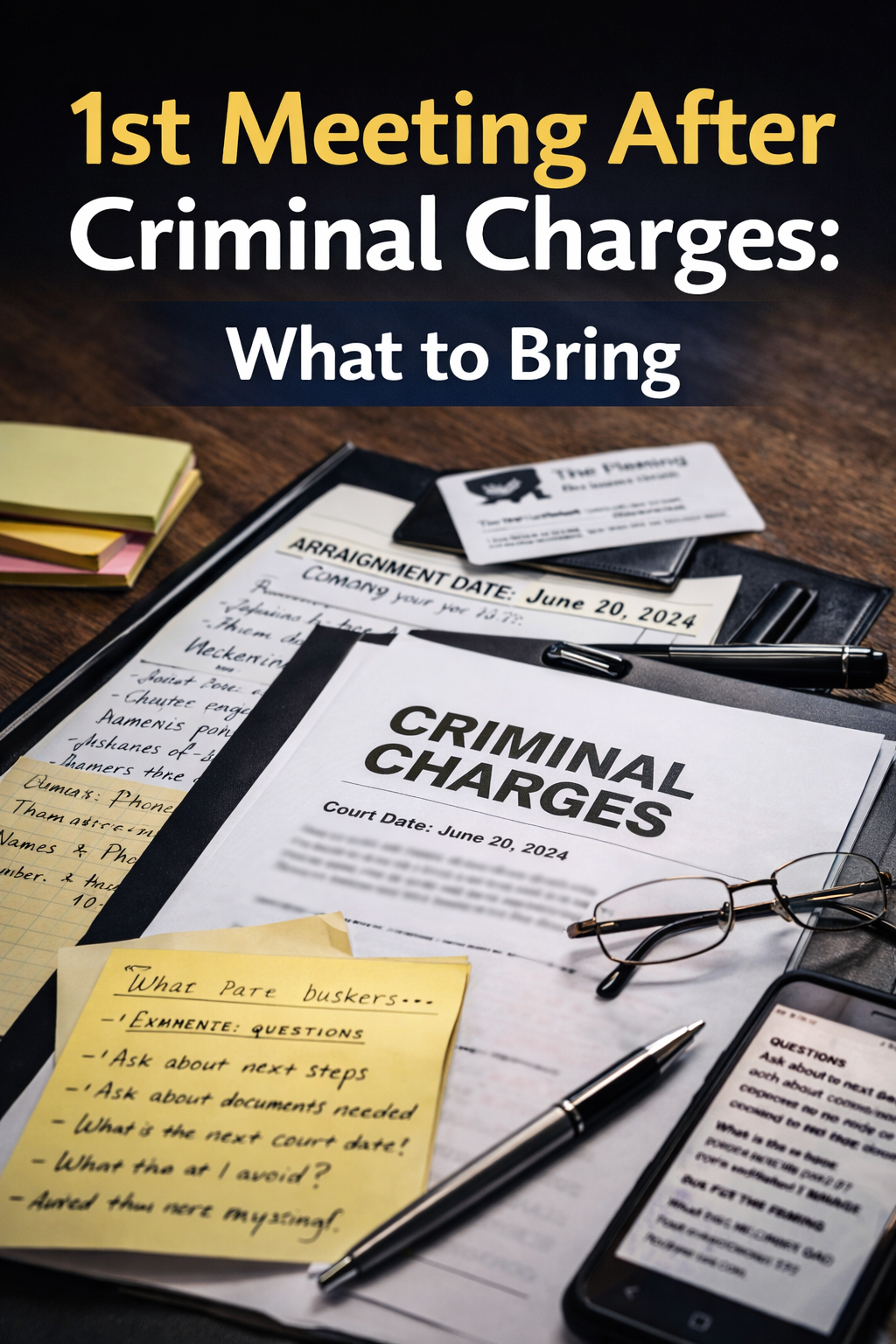
First Meeting After Criminal Charges: What to Bring
This is the easiest place to begin.
Bring every document you were handed. Court papers. Bond paperwork. Ticket paperwork. Charging documents. Release papers. Anything with a date, a case number, a court name, or instructions on it.
A lot of people think, “Well, this one probably does not matter.”
Bring it anyway. Tim Fleming says he’d rather “have it and not need it” than “need it and not have it.”
Even a piece of paper that looks unimportant to you may help explain timing, conditions, or what happened right after the arrest.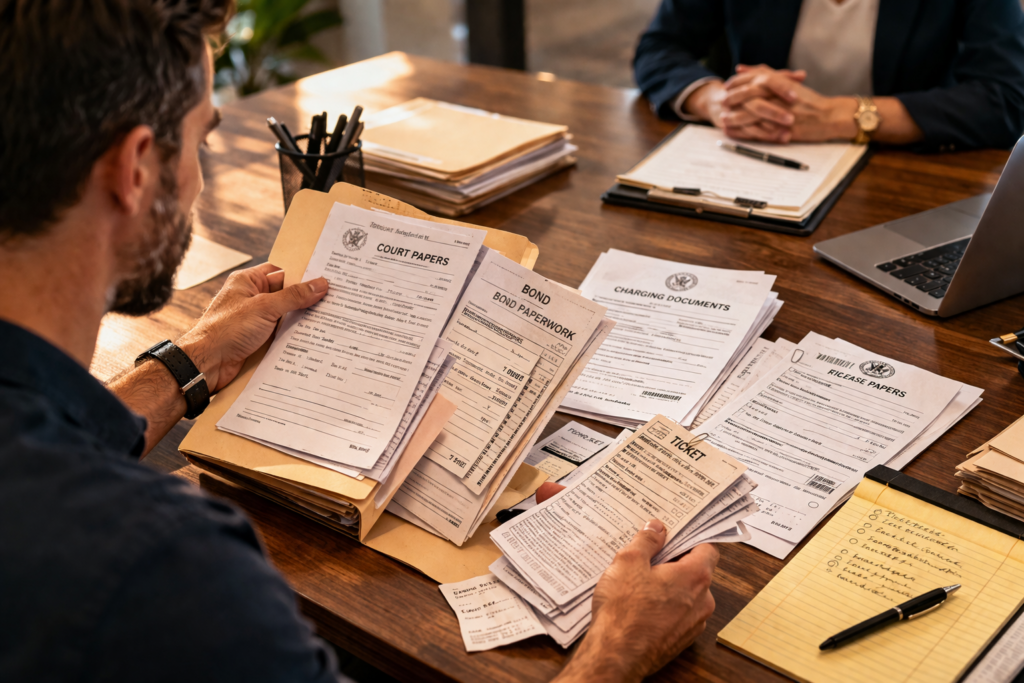
Bring a simple timeline, even if it is messy
You do not need to write a novel.
Just make notes.
What happened first? Who was there? What time did things start? What was said? What do you clearly remember, and what feels fuzzy?
That last part matters too.
People sometimes feel like they have to sound certain about everything. You do not. A simple timeline with honest notes can be far more helpful than trying to tell the story off the top of your head while stressed.
Bring anything the police gave you or said to you that stands out
If you were given paperwork, warnings, test results, inventories, or any written information tied to the stop or arrest, bring that.
Also write down details you remember about what officers said, what questions were asked, whether any testing happened, and whether anything about the interaction stood out to you.
You may not know what matters yet, and that is okay.
The point is not to sort the legal meaning on your own. The point is to bring the pieces of the story with you.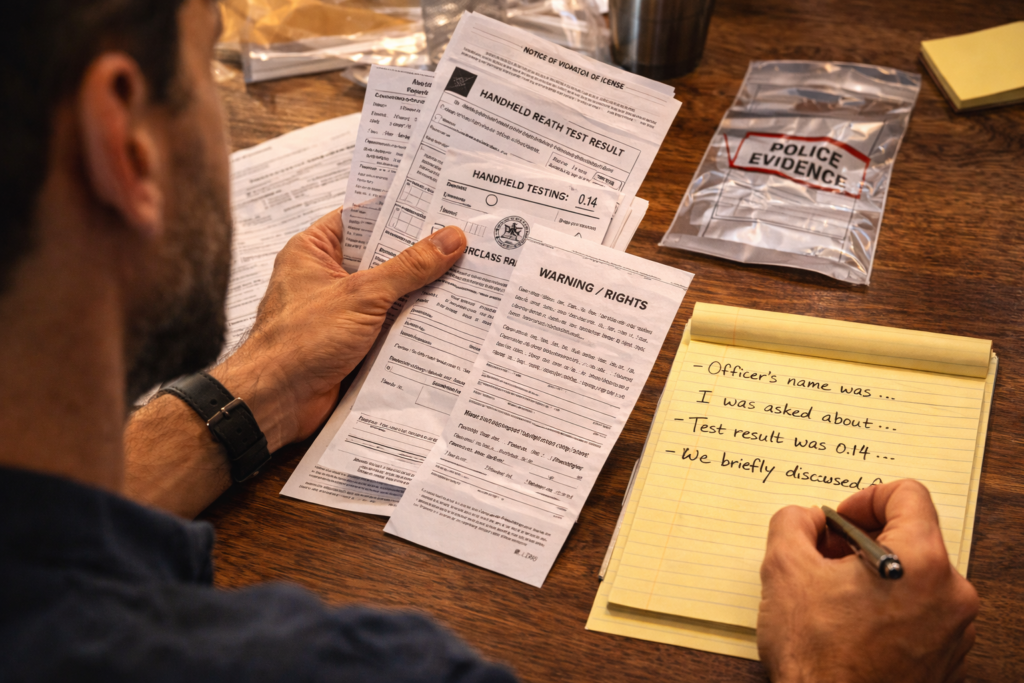
Bring your court date information
If you have a hearing date, arraignment date, or any notice with a deadline on it, do not leave that sitting on the kitchen counter.
Bring it.
When criminal charges are involved, timing matters.
Even if you think, “I already remember the date,” bring the paper anyway. It is always better to have the actual document in front of you.
Bring names and contact information
This part gets overlooked all the time.
If there were witnesses, family members involved in the timeline, passengers, or anyone else connected to what happened, write down their names and contact details if you have them.
Do the same for towing companies, bail information, or anyone else tied to the early part of the case.
You do not need a giant contact list. Just bring what you know.
Bring your questions too
People forget this one because they get focused on “bringing documents.”
But your questions matter just as much.
Write them down before the meeting.
Ask about the charge. Ask what the next court date means. Ask what you should avoid doing. Ask what paperwork still needs to be tracked down. Ask what the next few weeks may look like.
If you do not write your questions down, there is a good chance you will walk out and remember three of them in the parking lot.
What not to bring? A made-up version of the story
This is the part where it helps to just be straight.
Do not try to make the facts prettier. Do not leave out the parts you think sound bad. Do not rearrange the story to make it cleaner.
A first meeting after criminal charges is not the time to perform.
It is the time to be clear.
That does not mean you have to know every answer. It just means honesty matters more than polish.
If you feel scattered, that is normal
A lot of people walk into that first meeting feeling embarrassed, overwhelmed, or mentally all over the place.
That is normal.
Criminal charges can throw your routine off fast. So if all you can manage is a folder of papers, a few notes in your phone, and a list of questions scribbled on a receipt, start there.
That is still something.
One last thing
If you are meeting with a lawyer after criminal charges, bring the things that help tell the story clearly: paperwork, court notices, a basic timeline, names, contact details, and your questions.
You do not need to arrive perfectly organized.
You just need to show up with enough information to start the conversation in a useful way.
For people in Mobile trying to figure out what comes first after criminal charges, that first meeting can feel a little less overwhelming when you know what to bring with you.
Website: timfleminglaw.com